Saturday, January 19, 2013

Siem Reap - Day 2

Day 2 was a long day of sightseeing. It was the only day we were not able to go back to the hotel after lunch for a rest (and E's nap). The temples we visited on this day were clustered a bit out of the main city area. We were able to see: Pre Rup/ East Mebon, Banteay Srei, Ta Som, and Preah Khan.

First we went to Pre Rup and East Mebon, both identical in style. Pre Rup is a mountain temple built in 961 and dedicated to Shiva, the Destroyer. However, the name Pre Rup means to "change the body." This reflects the common belief that funerals were conducted at the temple. It was believed the vase in front was used as crematorium.


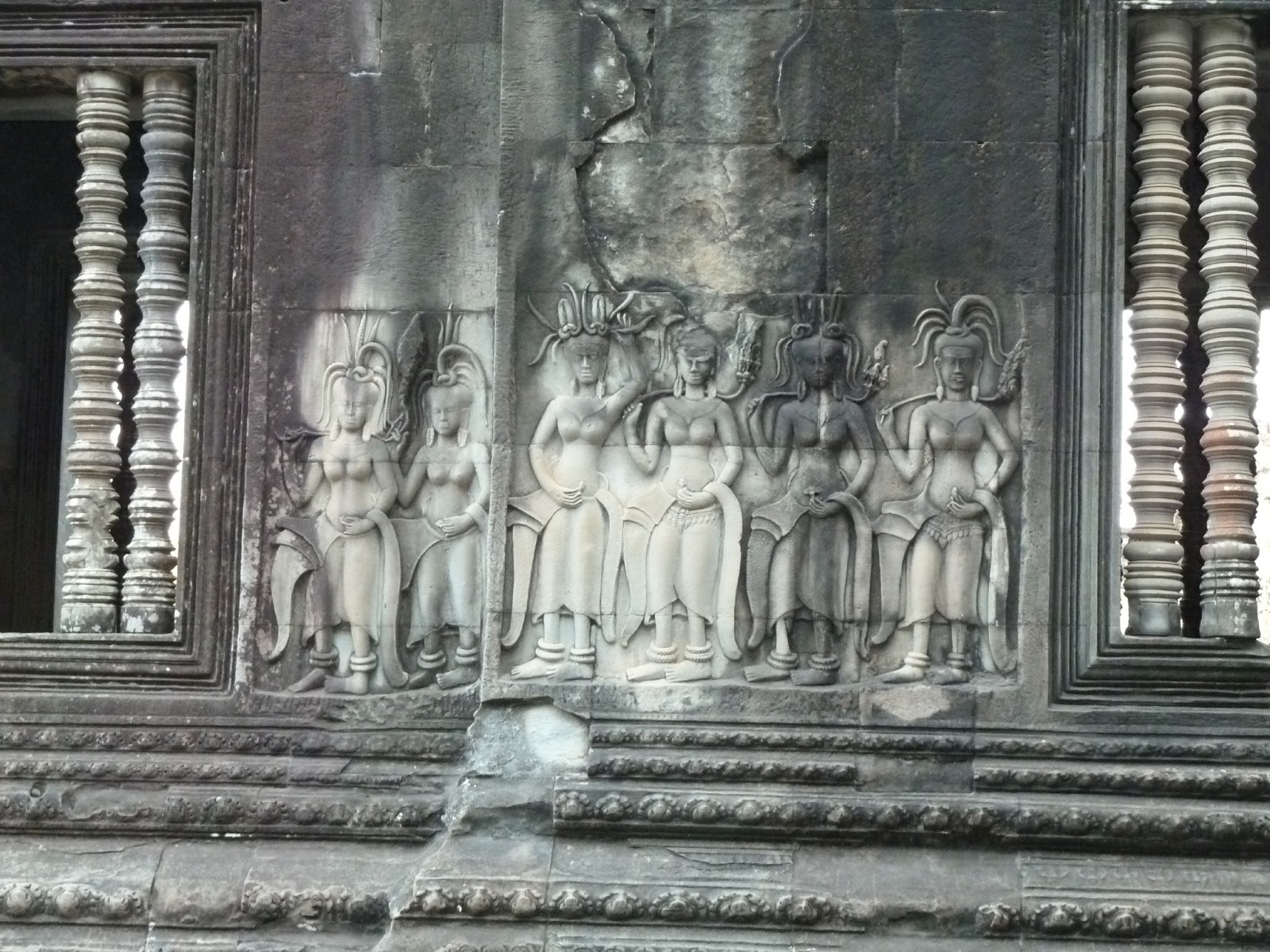
Next we went to Banteay Srei - a unique temple because it is made from pink sandstone. It was founded in 976 by two Hindu priests dedicated to The Trinity Gods “Brahma, Siva and Vishnu.” Banteay Srei is called "lady temple" and literally means "Citadel of Women." It is said that the details on this temple are so delicate that they could only have been carved by the hand of a woman. This is a temple where the exquisite and abundant detail is more impressive than the mass.


We stopped for lunch and had some amazing Cambodian curry and stir-fry dishes. I loved these cute coconut planters.


3 down, 2 to go for the day.

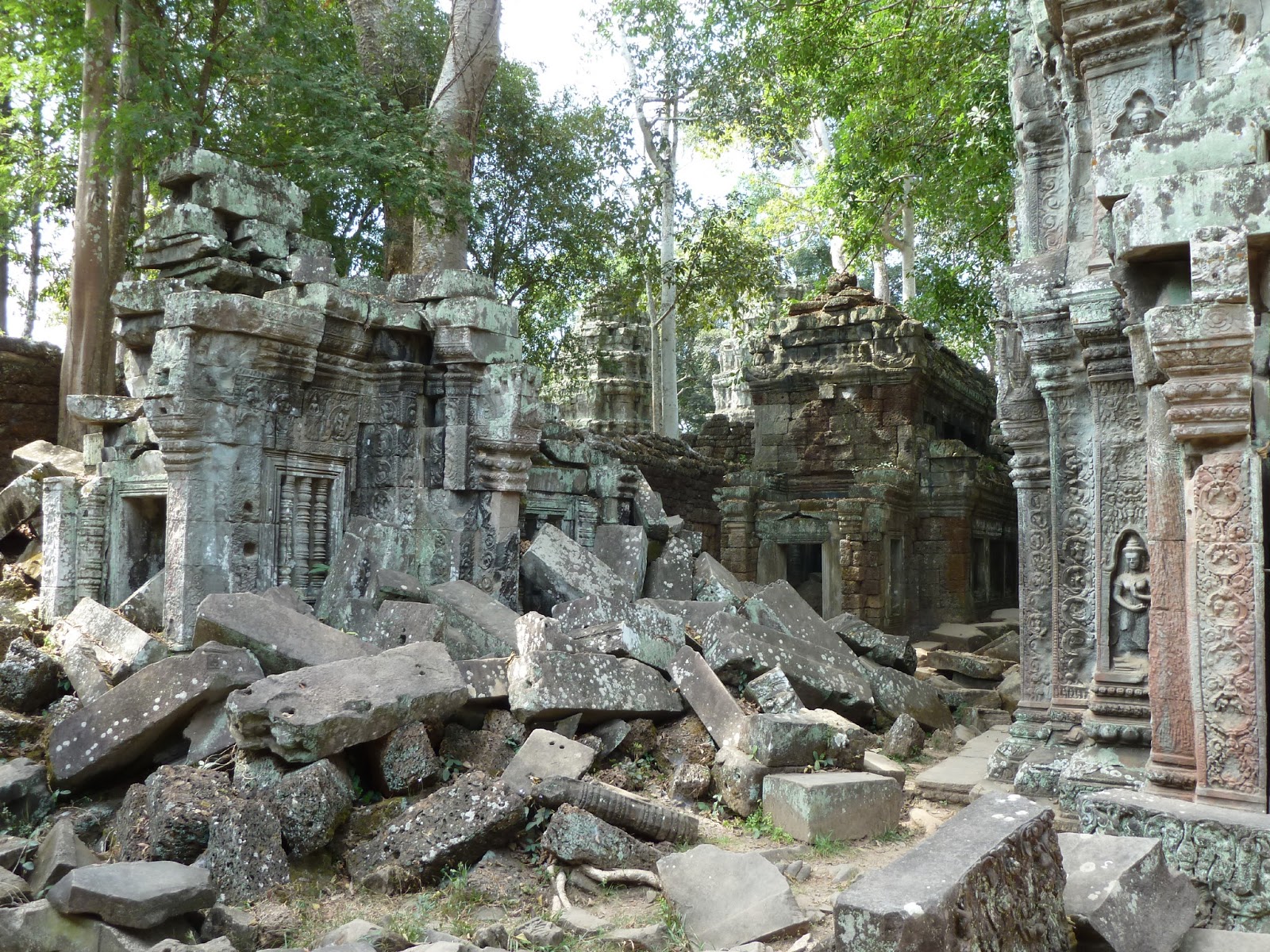
Ta Som was built at the end of the 12th century for King Jayavarman VII. The temple consists of a single shrine located on one level and surrounded by enclosed laterite walls. It has been left largely unrestored, with numerous trees growing among the ruins. Many of the carvings are still in relatively good condition.


The last temple we visited was Preah Khan. Although, it was 2pm at this point and E was beyond exhausted. She fell asleep in the backpack, so we took a quick peek then headed back to the hotel. Preah Khan means "the sacred sword," and was built in the 12th century by King Jayavarman VII who then dedicated it to his father. Like the temple above, it has been left largely unrestored. It was huge, so our quick peek really didn't give us the opportunity to see all that the temple had to offer.


Our poor, sweet girl was such a trooper this trip. But I'm relieved to tell you that when she woke up she was rewarded with a relaxing and fun evening. After some pool time with Daddy, we had a nice quiet, traditional Khmer dinner.


We ate a lot of curries and stir-fried dishes in Cambodia. It's hard to explain the taste, because even though many of the dishes looked Thai, Indian, or even Chinese... those weren't the flavors at all. Each dish had it's own unique flavor, and surprisingly none of it was spicy. The staple is rice, so almost all dishes are served with this. Our favorite Cambodia dish was fish amok - a fish, coconut curry steamed gently in banana leaves. It almost tasted like Thai green curry, but slightly different and not spicy at all.

Friday, January 18, 2013

Siem Reap - Day 1

I'm going to write my Siem Reap posts chronologically as we experienced everything, and go day-by-day. We did and saw SO much that this is really the only way I can remember and explain everything. 

Our morning began with a hearty all-you-can eat breakfast buffet at the hotel. Followed by Elodie making friends with the girl playing music in the lobby (which then became a daily ritual), and feeding elephants outside the first temple. Then it was a full day of sightseeing!


Angkor, in Cambodia's northern province of Siem Reap, is one of the most important archaeological sites of Southeast Asia. It extends over 250 square miles, and consists of numerous temples, structures, and monuments. It contains the magnificent remains of the different capitals of the Khmer Empire, from the 9th to the 15th centuries. Most temples are constructed from sandstone and include a phenomenal amount of detail.

Our first site was Angkor Thom, the last and most enduring capital city of the Khmer empire. It was established in the late 12th century by King Jayavarman VII. It's a walled and moated royal city, and includes some of Angkor's greatest temples. There are five entrances (gates) to this city. Each gate is crowned with 4 giant faces.


What I found especially crazy is that these gates are OLD! But yet, bikes, cars, buses, and even elephants are allowed to go through them. You can touch anything, climb on anything, basically do whatever you want to capture a photo. It's seriously only a matter of time before these gates (and all the temples for that matter!) are destroyed and just crumble.

The first temple we saw was The Bayon. It was built in the late 12th century as the official state temple of the Mahayana Buddhist King Jayavarman VII. Standing in the exact center of the walled city, it represents the intersection of heaven and earth. This temple's most distinctive feature is the multitude of massive stone faces on many of the towers. It actually has 49 towers with smiling faces.... 182 faces total (although today you can only see 177 of them). All the faces were considered compassionate faces of Buddha of King Jayavaraman VII himself. It was the first Buddhist mountain temple ever built.


This temple was just enormous, with so much to see and explore. I'm so glad we had a tour guide, otherwise we might have gotten lost inside there. The faces on the towers were just exquisite. So much detail in every single one of them.

We saw the Elephant's Terrace on our drive to the next temple. This wall is an impressive 8-ft tall by 980-ft long terrace wall adorned with carved elephants. The terrace served as a viewing platform for royal parties, from which the king could view his audience.


Next up: Ta Keo. This temple is tall, rising 21.6 meters (71ft?), making it one of the tallest buildings at Angkor. So there is quite the staircase to climb if you want to get to the top. It's not a popular temple, and actually we didn't even go inside. We just stopped at the side of the road to take pictures and get a brief explanation. Our tour guide said that legend has it that the temple was never fully completed because of superstition amongst the people following a lightening strike on the central tower. They believed the whole building brought bad luck. Today, hardly anyone climbs the stairs to the top (except maybe a few tourists) because if you do, you'll have bad luck.


4 sites down, 2 more to go (for day 1 anyway)! And this next one was one of our favorites.  

Ta Promh was created in 1186 by King Jayavarman VII. It has been left in much the same condition in which it was found. It's a pretty amazing site - surrounded by the jungle, and trees even growing out of the ruins. Have you seen the movie Tomb Raider? The movie was actually filmed here! Because of the photogenic scenery of the temple and being the site of the famous movie, it's one of the most popular temples in the area.


The two huge trees above are just examples of what we saw inside. There were many more! I love the face peeking out of the overgrown tree... makes you wonder what else is underneath.

Our last temple of the day was the famous Angkor Wat. Angkor Wat was built in the late 12th century for the king, as his state temple and capital city. It's the best preserved temple, and the only one to have remained a significant religious center. This temple has become the symbol of Cambodia, appearing on its national flag, and is the country's prime attraction for visitors. Our tour guide said this is the largest religious monument in the world.


It's amazing how much detail went into creating these impressive gates, walls, and temples. I only wish more was being done to restore, preserve, and cherish these beautiful buildings.

Thursday, January 17, 2013

Hanoi Video

Our Hanoi experience wrapped up in a quick 30-second video. This is us trying to cross the street in Old Quarter.


Did you notice the crash that happened in front of us, just a few feet away? Yikes.

Wednesday, January 16, 2013

Hanoi, Vietnam

We spent our last day and a half in Vietnam exploring the city of Hanoi. Hanoi is the capital of Vietnam, and the second largest city in the country.

I read an article describing Hanoi as, "the most beautiful city in all of Asia." I strongly disagree with this statement. It took us about an hour to get from the airport to our hotel in the heart of Hanoi (the Old Quarter). The drive allowed us to see a huge variety of things - farmers tending to their fields, rivers, old buildings, shacks, new buildings, trash everywhere, and even numerous people selling things along the highways. The drive was actually not pleasant at all. The roads were incredibly bumpy, and that topped with stop-and-go traffic with motorbikes and people everywhere all over the streets accounted for Elodie throwing up all over me in the car. Not a pleasant start to our trip in Hanoi.
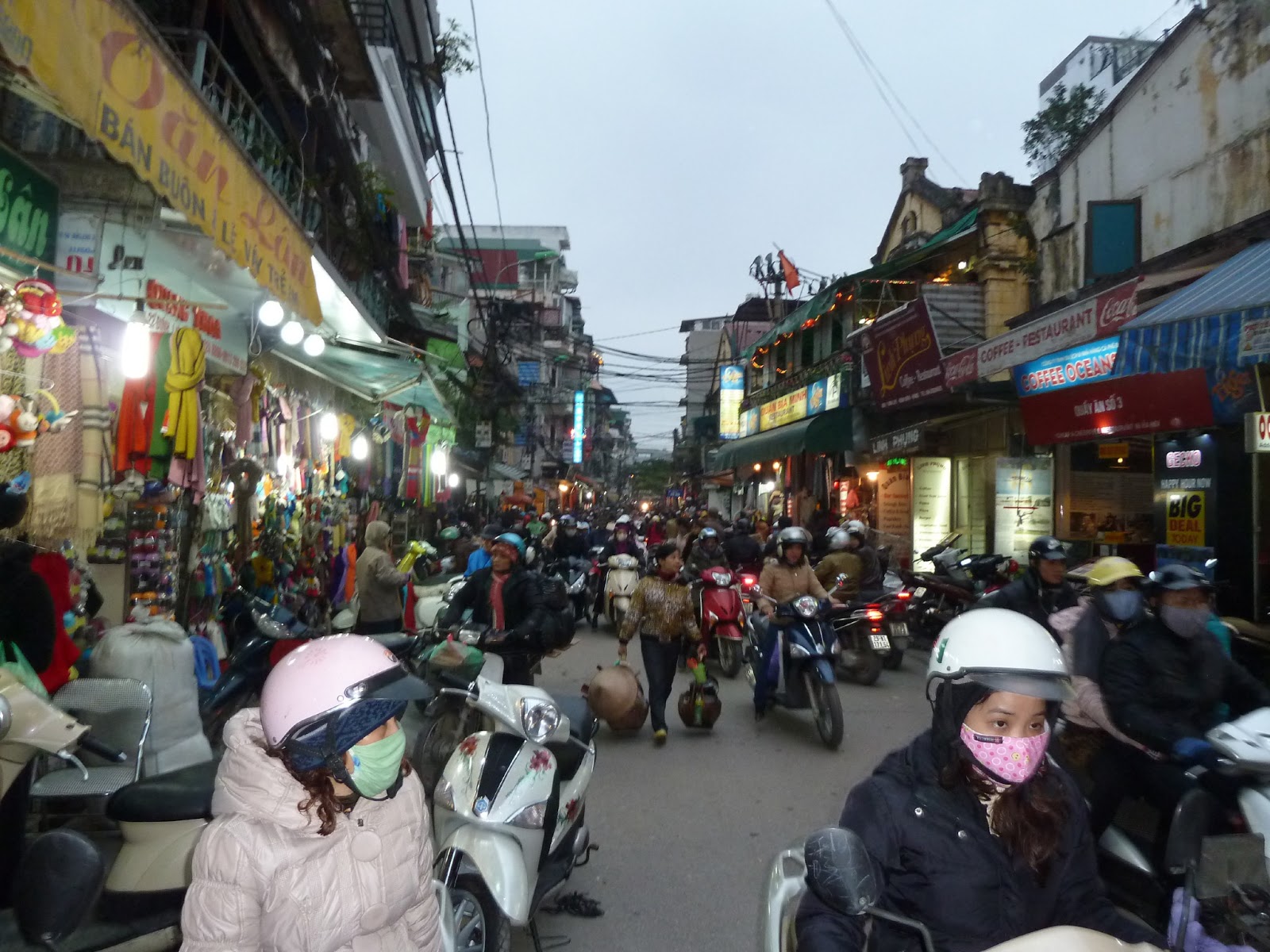

The city itself was interesting, and overall not what I expected it to be. The narrow streets are filled with shops, restaurants, motorbikes, cars, and people. The bustling city was constantly filled with the noisy sounds of honking - all day AND all night long. You seriously couldn't even walk down the street without feeling like you were going to be hit by motorbike. And the smell.... ohhh the nauseating smell that made me sick to my stomach every time we walked outside is hard for me to even describe. The smell of an overcrowded city - people, food, trash, and major exhaust fumes. Our tour guide said there are about 7-million people living in Hanoi, and about 4 million of them have motorbikes. It was overwhelming.


Notice the chaos of power lines in the photo above. This was a pretty common site throughout the city.

Our hotel was in the Old Quarter, which is where we spent the majority of our time. Old Quarter means "Ancient Quarter" or "36 streets." The 36 little streets are each named for a commodity once sold by all of the businesses on that street. So each street had merchants and households which specialized in a particular trade, such as medicine, copper, chicken, silk, jewelry, etc. It was an interesting area, with a lot of history and cheap shopping (but you always have to bargain).


It was certainly a city filled with history, and despite the overwhelming crowds and fumes there was a lot to see. You could look in almost every direction and see women carrying the traditional Vietnamese baskets over their shoulders or even on their heads. It was also common to see women on bikes filled with produce, looking to sell their goods to local vendors. 

Hoan Kiem Lake sits near the Old Quarter, and is one of the major scenic spots in the city. It's a city focal point and remains "the very heart of life in Hanoi." There is some legend about a giant turtle presenting the emperor with a magic sword to defeat Chinese invaders, which is why this lake is named "Hoan Kiem" or "restored sword." Ngoc Son Temple sits on an islet at the end of the lake. I read that certain parts of the structure date back to 1225.


Luckily Hanoi is very compact, so we were able to see all of the major sites in a day. We hired a personal tour guide and driver, who took us around everywhere. There is not a subway system here, so hiring a driver was well worth it, especially because it was cold and rainy.

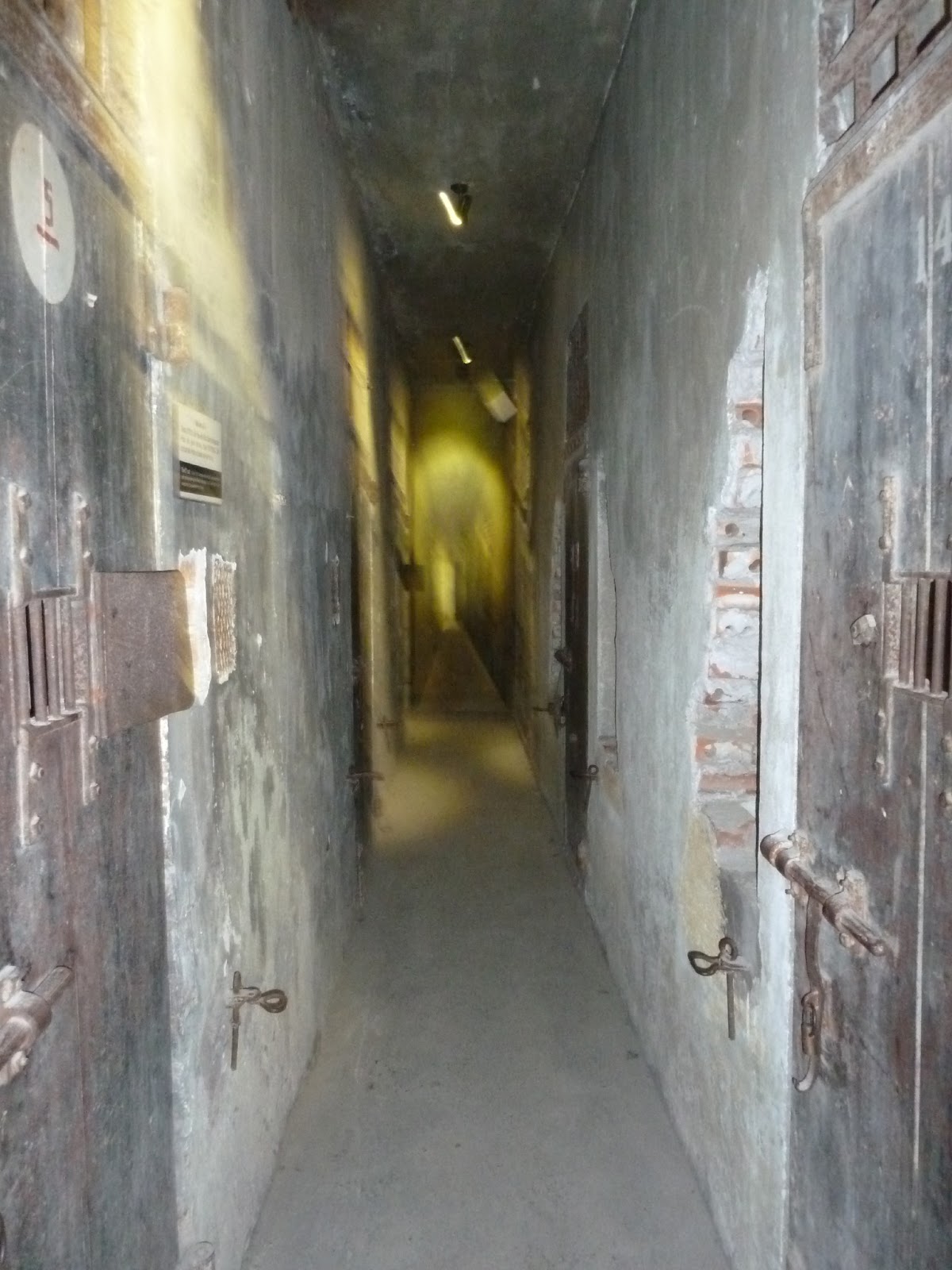
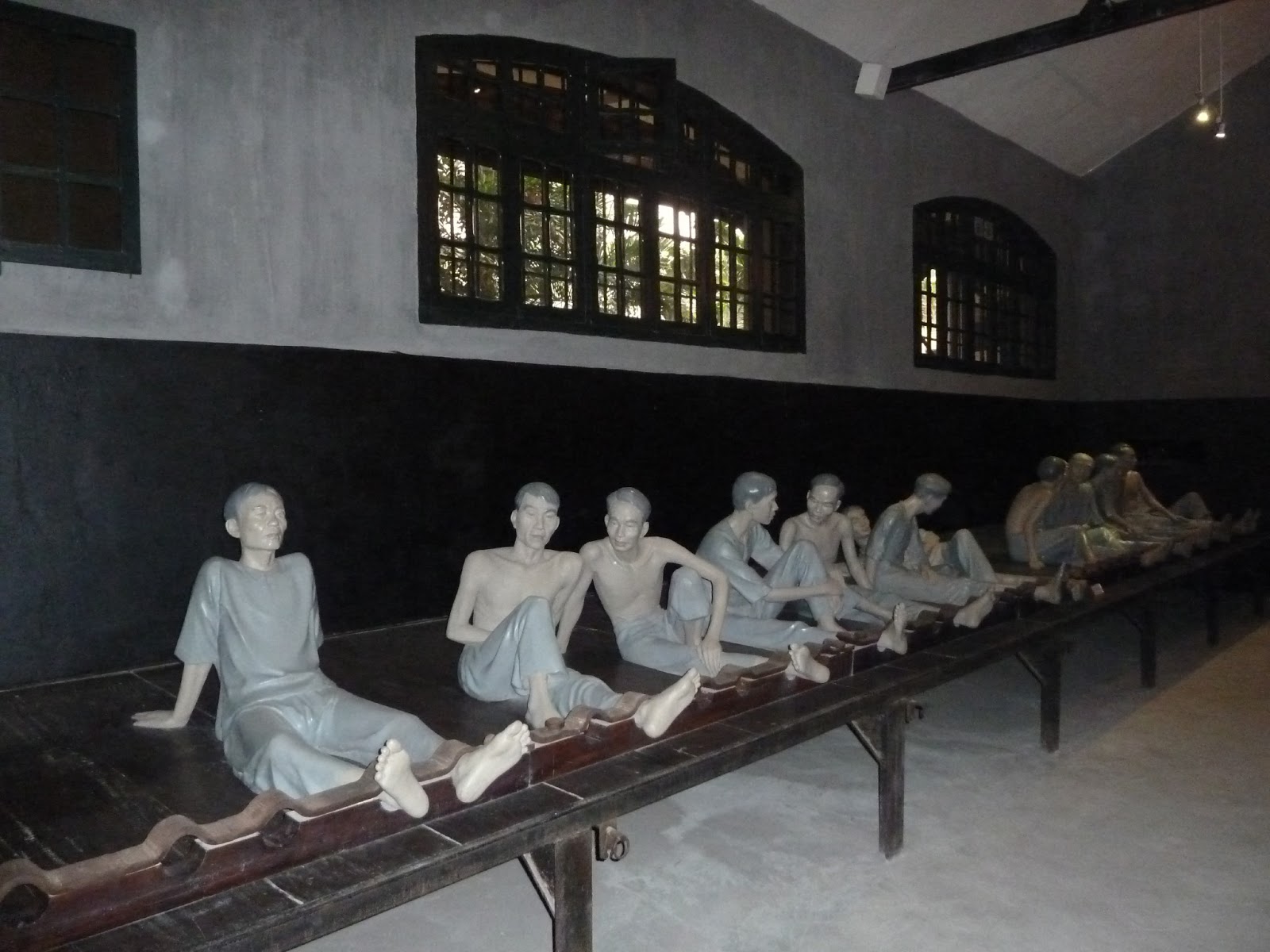
Our site-seeing adventure began at the Hanoi Hilton. Don't let the name deceive you, this is not a hotel. It's actually Hoa Lo Prison, the prison that housed many American prisoners during the Vietnam War. The prison actually still displays John McCain's uniform from the day he was captured. Needless to say, it was a depressing site.
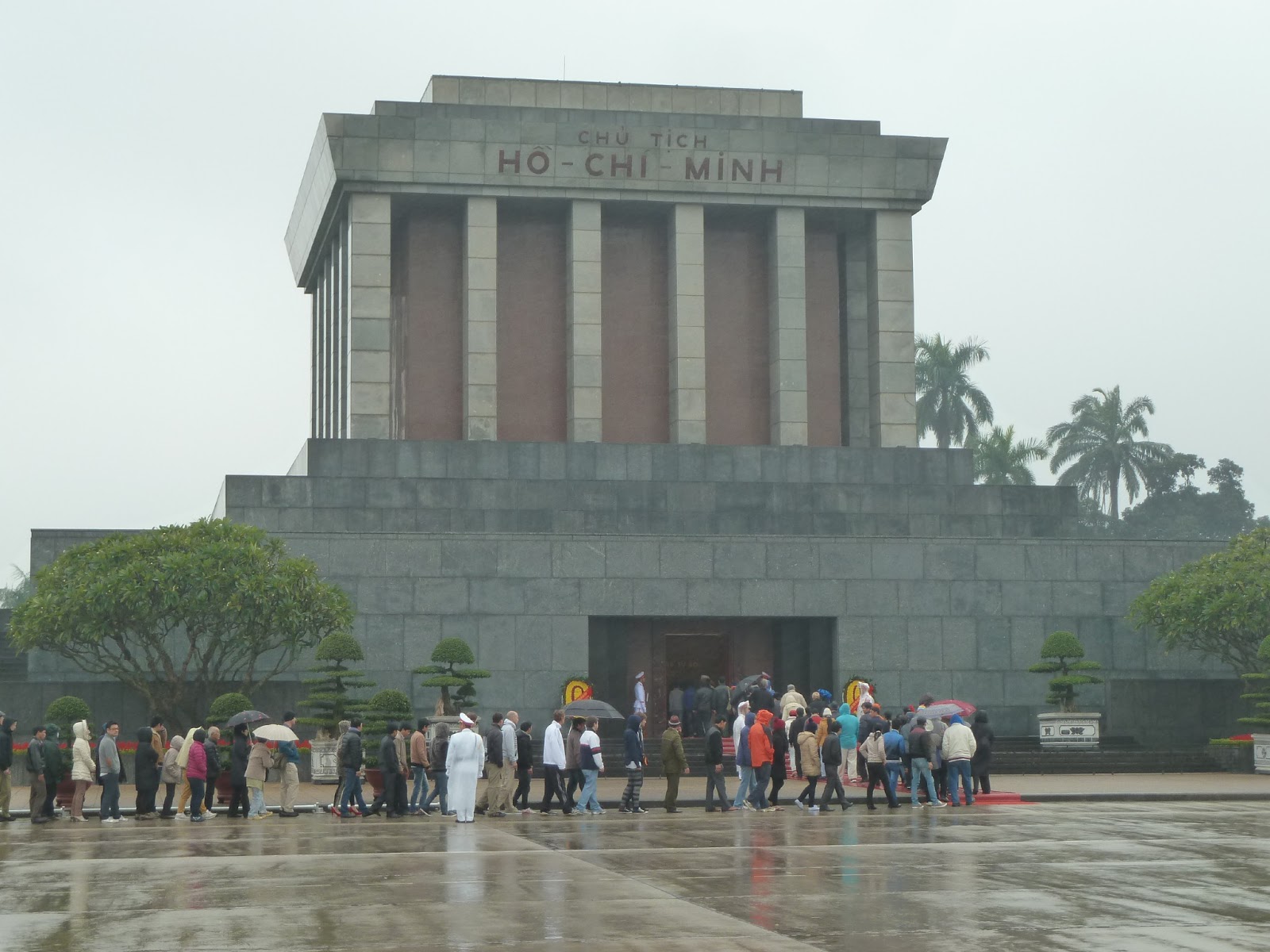
Next we visited Ho Chi Minh's Mausoleum - the massive tribute to the most famous leader in Vietnam. It's the city's most visited site and "sacred place." We were told that Ho Chi Minh wanted to be cremated after death.  Instead of adhering to his wishes the people embalmed his body and placed him on display for all eternity in a glass tomb.  Nice way of showing their respect, huh?  In fact, they view his tomb as so sacred that they don't allow young children inside. So because we had Elodie, we couldn't go inside - but that's ok, I didn't really want to see his body anyway. Kind of creepy if you ask me. Anyway, the Mausoleum is only open in the mornings, from 8-11am. Our tour guide said this is because in order to preserve his body, they have to keep it cold the majority of the day - so there's only a 3 hour window where his body is actually put on display.

A short walk further you come across a bright yellow building known as the Governor's Palace. Unfortunately, you're not allowed inside this building. Behind the wooded park next to this yellow building sits Ho Chi Minh's house on stilts. Our tour guide said that Ho Chi Minh used to live in the Governor's Palace, but he didn't like it because it was built by the French and he thought it was too elegant for his simple lifestyle. So that's why he build the small and simple house on stilts next door to it.


Next, we visited the One Pillar Pagoda, which has a historical significance to the city dating back to 1049; and the Tran Quoc pagoda, which is the foremost symbol of Buddhism in the country. These were just two quick stops, so I don't have much to say about them because I don't know much about them!


After a short car ride across the city, we arrived at the Temple of Literature. It was built in 1070 and was formerly the site of one of the oldest universities in Vietnam. It's now a tribute to Confucius and used as a Confucian temple. The landmark has numerous pavilions and courtyards, and stone turtles.


We ended our evening with a tour around the Old Quarter in a cyclo (like a rickshaw) and a show at the Water Puppet Theatre. The traditional Vietnamese water puppet show dates back numerous centuries. There are several short performances or "Acts" throughout the entire show, each with it's own song, dance, and theme. Each Act revolves around a different Vietnamese lifestyle and includes performances such as: fishing, tending to the rice fields, dragon dancing, cultural dances, etc. Tickets only cost between $3-5, with numerous show times each day (but believe it or not, they sell out quickly!). We didn't get any good photos from the show ourselves, so the photo below is from here.


Wow, I know that was a lot of information. Thanks for reading. :)

I'm sure you could sense a tone throughout this post, because I didn't really like Vietnam all that much. But all in all, I'm glad we went. It was definitely a good cultural and eye-opening experience. My favorite part (of course) was the food. Vietnamese is ranked right up there with Italian & Indian on my list of favorite cuisines. Pho = the best soup EVER! I better be able to find this when we're back in the U.S.